Friday, August 20, 2010

Mexico's Independence From Spain

The Mexican War of Independence which led to Mexico's independence from the Spanish Empire was originally just an idealistic rebellion by peasants against their landlords and masters. The war started in 1810 and lasted for more than a decade. It was led by Mestizos, Creoles and the Amerindians.

How it all started

The upheaval that led to Mexican independence started with the political and economic changes that Europe, and, in effect, its American colonies, faced during the later part of the 18th century until the 19th century. Spain's attention towards its colonies was distracted by the French Revolution and the wars led by Napoleon and this caused an increasing dissatisfaction with the current regime. It also gave rise to a desire for the colonies to create their own local governments.

Mexico found an opportunity to promote its independence when the then Spanish King Ferdinand VII was overthrown and replaced by Joseph Bonaparte. From there came a series of reform movements by liberal organizations which were then forced to go underground.

One of these movements, the Literary Club of Queretaro, came out as the most prevalent in sowing the seeds of revolution. It was composed of independence and reform-oriented thinkers who also began to consider the possibility of enlisting the lower class masses, Indians and mestizos into the cause. In fact, it was a member of this group, a Father Miguel Hidalgo y Costilla who will turn out to be at the core of the fight for Mexican independence.

Father Hidalgo and his fight for independence

The Mexican war for independence started on the night of September 15, 1810 when Hidalgo declared war against the colonial government following the betrayal of a supporter. The revolutionary army marched on to Guanajuato, a colonial mining center that was under the Spaniards and the creoles. On September 28, the rebels took over the granary and most of the people managing the center were either exiled or massacred.

Successful uprisings

After the takeover of Guanajuato, Hidalgo's army went on to achieve victory in a number of battles. One of the most notable was the Battle of Monte de las Cruces on October 30, 1810. They did gain a lot of casualties, however, as the army failed to defeat the Spanish armada in Mexico City. The surviving rebels sought refuge in nearby villages and provinces. Eventually, Father Hidalgo and what was left of his army was captured in Jalisco where he faced court trial. He was executed by firing squad on July 30, 1811 after being found guilty of treason.

After the death of Hidalgo, the army came under the leadership of Jose Maria Morelos. During this period, the rebels took over the cities of Acapulco and Oaxaca. On November 6, 1813, the Congress of Chilpancingo was convened. This was when the first official document of independence - "Solemn Act of the Declaration of Independence of Northern America" - was signed. The event triggered a long period of war known as the Siege of Cuautla.

Independence from Spain

The Independence War grew to a guerilla war from 1815 to 1821. The war saw a lot of casualties particularly resulting to the death and defeat of its leaders. It was about to go on the state of collapse had it not coincided with the Liberal revolution in Spain which jumpstarted the Spanish Civil War from 1820 to 1823. Spain tried to regain Mexico until 1829. Finally, the kingdom recognized the country's independence in 1830.

Thursday, August 19, 2010

Guerilla Etymology


Guerrilla (Spanish pronunciation: [ɡeˈriʎa]) is the diminutive of the Spanish word guerra "war", literally "little war". It derives from the Old High German word Werra or from the middle Dutch word warre; adopted by the Visigoths in A.D. 5th century Hispania.

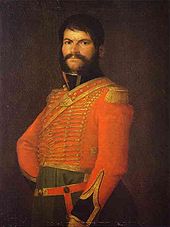
In War and Peace (written in 1865-1869, in part about Napoleon's invasion of Russia), Leo Tolstoy says that guerrilla warfare is named after the Guerrillas in Spain. He appears to be referring to a specific group that used guerrilla warfare in a war fought in Spain before the 1860s. That war began in 1808 with the occupation of Spain by Napoleon's French army. Bands of guerrillas (so named; one of the most important led by Juan Martin Diez) and the regular Spanish army both fought Napoleon. Our modern word "guerrilla" traces its origin to these bands in this war. These guerrillas were very effective in fighting Napoleon. Their principal function was to disrupt the supply and communication lines of the French army by intercepting messages and by seizing convoys of supplies, arms, and money. They did so much damage to Napoleon's army that Joseph Leopold Hugo, a French general, was ordered to "pursue exclusively" Diez and his guerrillas. According to Merriam Webster's Collegiate Dictionary, the word "guerrilla" was first used as a noun in 1809 and as an adjective in 1811.

Guerrillero is the Spanish word for guerrilla fighter, while in Spanish-speaking countries the noun guerrilla usually denotes guerrilla army (e.g. la guerrilla de las FARC translates as "the FARC guerrilla group"). Moreover the term guerrilla' was used within the English language as early as 1809. The word was used to describe the fighters, and their tactics (e.g."the town was taken by the guerrillas"). However, in most languages guerrilla still denotes the specific style of warfare. The use of the diminutive evokes the differences in number, scale, and scope between the guerrilla army and the formal, professional army of the state.

An early example of this came when General John Burgoyne who, during the Saratoga campaign of the American War of Independence, noted that, in proceeding through dense woodland:
‘The enemy is infinitely inferior to the King’s Troop in open space, and hardy combat, is well fitted by disposition and practice, for the stratagems of enterprises of Little War...upon the same principle must be a constant rule, in or near woods to place advanced sentries, where they may have a tree or some other defence to prevent their being taken off by a single marksman.'
So conscious of hidden marksmen was Burgoyne that he asked his men, ‘When the Lieutenant General visits an outpost, the men are not to stand to their Arms or pay him any compliment, clearly aware he would be singled out.

Wednesday, August 18, 2010

The Guirella Concept

"Attack where he is unprepared; sally out when he does not expect you."
- Sun Tzu
A fascinating unconventional way of combat is the guerrilla war. The guerrilla actually originated in Spain during the French occupation (1802) and placed a heavy burden on the Napoleonic forces. In the second half of the 20th century it proved to be an effective form of mobile warfare as demonstrated by the victories of Mao Zedong, Tito and Ho Chi Min and his supreme commander General Giap. The guerrilla war is a very effective method for a meagrely armed army being confronted by superior conventional forces. It is imperative that guerrillas be strongly motivated and have the support of the population. This support is vital because it is the powerbase of guerrilla forces.

The most famous guerrilla maxim was formulated by Mao Zedong:
"The enemy advances, we retreat.
The enemy halts, we harass.
The enemy seeks to avoid battle, we attack.
The enemy retreats, we pursue."
The beauty of this maxim is that it concisely formulates the essence of the fluid tactics of guerrilla warfare. Clearly it's a strategy of attrition of long duration. Mao Zedong defined it as "the strategy of the protracted conflict". Elasticity and mobility are essential to avoid quickly an unfavourable action of the enemy, which also means that guerrilla forces must be able to obtain information about the enemy's moves in time. It is the population which provides the necessary intelligence and shelter.
"The guerrilla must move along the people as a fish swims in the sea."
- Mao Zedong
Because of the support of the population the guerrilla wars in China and Vietnam were successful, but the guerrilla warfare of the communist uprising in Malaysia (1950-1960) was a failure because the British succeeded in denying the guerrillas the support of the people. The guerrilla strategy aims at gradually weakening the enemy until in the long run that final moment is reached where superiority has been gained and when one has to engage in the final decisive battle in the conventional way. The problem is the transfer from guerrilla warfare to large-scale positional warfare. Small guerrilla groups are able to eat away at the enemy's strength but cannot conquer large cities or subdue a large, well concentrated conventional army. Regular ground troops are still needed to occupy inhabited territory. This implies that the guerrilla army in the end-phase must be able to transform itself into a conventional force which is able to permanently occupy conquered territory.

Business seems to be quite attracted by the concept of the guerrilla warfare, probably because of its romantic aspects and because subterfuge, surprise, ambushes and stratagems are the order of the day. David versus Goliath! However, guerrilla warfare does not consist of just one action; it is a relentless pattern of small tactical actions. To resort to guerrilla tactics the organization needs to have the stamina to take up a strategic battle of long duration. Well orchestrated conventional flank attacks or encirclement tactics are often much more effective than the protracted strategy of the guerrilla warfare.

Guerrilla warfare is only possible when the company possesses:

1. Well motivated employees;
2. A flexible and creative organization;
3. Good products;
4. Enough stamina;
5. The sympathy of the public.

Guerilla - The Writings That Inspires

The Writings that Inspires

Here are some of the writings from different authors regarding Guerilla Warfare. Though they are dead or thought to be dead, their messages still continues to inspire masses in countries that have political chaos and no firm leadership. These messages echoes through the heart of these people because they can relate with the hardship brought upon by political chaos.

Theories of Mao Zedong (Mao Tse Tung)

Mao Zedong, during the Chinese Civil War, summarized the People's liberation Army of the principles of revolutionary warfare in the following points for his troops: The enemy advances, we retreat. The enemy camps, we garble. The enemy tires, we attack. The enemy retreats, we pursue. A common slogan of the time went "Draw back your fist before you strike." Referred to the tactic of baiting the enemy, "drawing a fist," before "striking" the critical moment where they are overstretched and vulnerable. Mao made a distinction between Mobile warfare (yundong zhan) and guerilla warfare (youji zhan), but they are part of an integrated continuum aiming towards a final goal. Mao's successful work, In guerrilla warfare, is widely distributed and applied, successfully in Vietnam, under military leader and theorist vo Nguyen Giap. Giap's "People War" closely follows the Maoist three-stage approach.

T. E. Lawrence

Te Lawrence, best known as "Lawrence of Arabia," introduced a theory of guerrilla warfare tactics in an article he wrote for the Encyclopedia Britannica published 1938. In that article, he compares guerrilla fighters to a gas. The fighters disperse in the area of operations more or less randomly. They or their cells occupy a very small space in real places, such as gas molecules occupy a very very small space in a container. The fighters may coalesce in groups for tactical purposes, but their general state is dispersed. Such fighters can not be "rounded up." They will not be content. They are extremely difficult to "defeat" because they can not bring the war in significant numbers. The cost in soldiers and material to destroy a significant number of them becomes prohibitive, in all senses, that physically, economically and morally. Lawrence describes a non-native occupying force of enemies (like the Turks).

Abdul Haris Nasution

The expression of the Indonesian army founding doctrines is found in Abdul Haris Nasution's 1953 Fundamentals of guerilla warfare. The work is a mix of reproduced strategic directives from 1947-1948, Nasution of the theories of guerrilla warfare, his Reflections on the only previous time (post-Japanese occupation) and the likely crises to come, and outlines of his legal frameworks for military justice and "guerrilla government". The work contains similar principles to those espoused or practiced by other theorists and practitioners from Michael Collins in Ireland, Te Lawrence in the Middle East and Mao in China in the early twentieth Century, the contemporary Insurgents in Afghanistan and Iraq. Nasution willingly shows his influences, frequently referring to some guerrilla activities as "Wingate" actions, quoting Lawrence and drawing lessons from the recent and further past to develop and illustrate his well consider these arguments.

Ernesto "Che" Guevara de la Serna

"The guerrilla band is an armed nucleus, the fighting vanguard of the people. It draws its great force from the mass of the people themselves. The guerrilla band is not considered under army against which it fights simply because it is less fire power. guerilla war was used parts which are supported by most but containing many smaller number of weapons for use in defense against tyranny. "

Tuesday, August 17, 2010

Guerrilla Operations and the Political and Religious Aim

Guerrilla warfare is a war by irregular troops against a conventional army. The theories of Mao Tse Tung and Che have given a new dimension to this type of conflict. But both these guerrilla warfare experts talked only of a political aim to sustain a guerrilla operation.

In the present century this political aim is modified with a religious aim.Thus the Guerrillas fighting in Afghanistan, Philippines and Iraq and a host of other places have religious zeal as their motive in addition to the political aim. Thus the biggest challenge facing an established government is a Guerrilla operation spearheaded by Militants who are fired by religious zeal. For them the Establishment of an Islamic order in the purest form,however divorced from reality it may be is the ultimate aim.

Thus the Western powers led by the USA and other nations like India and Russia have to face the guerrilla fighters who are indoctrinated in the perverse aspects of Islam. Without this aim these operations may perhaps fail. Thus the Islamic militants take the support of the common man. The armies that fight these Islamic militants have thus the onerous task of weaning away the local population from the religious appeal of the militants.

There is no doubt that political or religious aim is the most important point and may well decide who wins the war. We are aware that the Guerrilla lives of the Land and people. Keeping the above in mind, anti-Guerrilla operations must be seemed to be just and avoid violence against the masses. The famous quote of Nietzsche "that whoever fights monsters should see to it that in the process he does not become a monster" must be kept in mind in these operations.

The breeding ground of Guerrilla activities is economic misery. In case this is eliminated the Guerrillas would loose much of their force if economic development is initiated. But the million dollar question is how do you usher in economic development when the Guerrillas are still active. Thus it is important to crush this guerrilla force like it was done by the Sri Lanka Army against the LTTE not with a little support from India.

Religion has a tremendous appeal. This in a way is also related to economic misery and more so ignorance. The Islamic jihadists draw their sustenance from the Islamic texts and play on the ignorance of the people. This turns into violent cocktail and fighting this menace can be difficult.

The Islamic Jihadists thus have for their own purpose indoctrinated a large number of people to fight in the name of Islam. They refer to it as a religious war and portray it as a fight between good and evil. This is a major threat for the Western Democracies, India as well as Russia and even China.

Modern guerrilla operations cannot succeed without a political or religious aim. Thus it is important that guerrillas are countered keeping this in view. More important it is incumbent to fight the religious thought as the appeal to religion transcends everything.

Monday, August 16, 2010

The Massacre at Dantewada - A Watershed in India's War Against the Maoists

The Home minister Chidambram in a statement attributed to him and reported by the Times of India had announced that the Maoist insurgency would be over in two years. Accordingly a paramilitary force of almost 55,000 personnel was deputed to counter the Maoists, who draw their inspiration from the legendary Chinese leader Mao tse Tung. The operation named 'Green Hunt' was expected to be the beginning of the end of the Maoist insurgency in Central India.

As a part of this operation about 120 personnel of the Central Reserve police Force of the 62nd battalion was returning after a combing operation near Chintalnar in Dantawada district of the Indian state of Chattisgarh. Dantewada is 400 kilometers from the state capital Raipur. This state is situated in eastern India.
The patrolling party took the Maoist menace lightly and did not follow the laid down procedures during the march. Accordingly a ferocious attack was mounted by the Peoples Liberation Army, the Maoist military wing. The CRPF party was ambushed and could not fight back as they were surrounded and the Maoists who opened fire were perched on nearby hills. At first count 74 personnel have been killed in what has been the biggest attack by the Maoists ever.

The Maoist liberation army had planned this operation with great care and diligence. Accordingly they attacked the CRPF troops at a place and time of their choosing. The attack took place in the early hours of Tuesday 6th April between 6 and 7 am. The CRPF party was returning after a combing operation in this Maoist infected area in bid to wrest control from the Maoists. But the Maoists had planned and done their home work. They had the element of surprise and detonated pressure mines that had been implanted earlier. The bullet proof vehicle with the CRPF was blown. This shows meticulous planning by the Peoples Guerrilla army.

The attack must have come as rude jolt to the Home minister. It also raises questions that the Chidambram will find it difficult to answer. The attack itself would have severely dented the morale of the troops operating in the area. The Home Minister had earlier stated that the army was not an option. Perhaps he may have a rethink to do as the Governments policy of using minimal force appears suspect. Even after the episode the Home secretary ruled out the option of using air power.

The Chief of the Air Staff went on National TV on 7 April and announced that he did not favor the use of the Air Force against our 'own people'. But the Prime Minister has said that all options are under consideration including air power.

The sands of time are running out. The Naxal/ Maoist operation cannot be treated with kid gloves. The Prime Minister and the Home Minister owe it to the nation to show leadership and resolve to stamp out this insurgency that can eat into the roots of the Indian nation.

Sunday, August 15, 2010

The Military Campaign of Shivaji Against Aurangzeb

Shivaji Maharaj was a Maratha warrior during the time the powerful Moghul Aurangzeb ruled India. It must be appreciated that the Moghul power during the reign of Aurangzeb was at its zenith and the emperors writ ran from Kabul to the Deccan and further East to Bengal and Oudh.

It was also a trying time for the Hindus as Aurangzeb who was a devout Muslim imposed the Jizya tax on Non Muslims. But at the same time it must be said that a lot many Hindus were also part of Aurangzeb's Army. At this juncture to fight the great moghul and set up his own kingdom deserves mention as an act of tremendous courage and bravery.

Shivaji who was born in 1630 soon challenged the Moghul emperors authority. After a ceaseless struggle he had himself crowned as king in 1676. Aurengzab authorized numerous campaigns to defeat him. The vast Mughal army on a number of occasions advanced against Shivaji. But the elusive Maratha perfected the art of evasion, retreat and counterattack and made the Mughal army pay a heavy price for attacking him.

Shivaji thus fought the Mughal army with guerrilla tactics.He would,with his band of soldiers move away into the Western Ghats and attack the imperial Army only at a place and time of his choosing.Thus the Maratha warrior made a name for himself and the down trodden Hindus had someone to look up to. It must be mentioned that Shivaji was a devout Hindu and for the first time when he challenged Aurangzeb, the Hindus could live and practice their religion with ease.

Shivaji had a continuous battle with Aurangzeb and the Mughal Army.Aurangzeb was an inveterate enemy of Shivaji and after repeated attempts to defeat him remarked"My armies were employed against him for 19 years,but nevertheless,his state is always increasing". But again the fact remains that as long as Aurangzeb was in power the effect of his power was minimal.

Aurangzeb reduced the Moslem ruled states of Bijapur and Golkonda and this brought him in direct confrontation with Shivaji. The Moslem army also had a large number of Maharathas in their ranks and this created confusion, which was skillfully exploited by Shivaji. He adopted Guerrilla tactics to fight the superior armies of Aurangzeb. But the battles did not give him a decisive victory over the Mughals.

Shivaji's mark as a warrior will remain for ever. But again it must be understood that he was unable to decisively defeat Aurangzeb and the emperors rule and power continued to increase. His significance lies in the fact that he challenged the Mughal empire when it was at its apex and carved a niche for himself for all time to come as a warrior and Soldier who dared Aurangzeb and the Moghul empire.